Why Much More Families Are Picking Assisted Living for Loved Ones
Business Name: BeeHive Homes of Pagosa Springs
Address: 662 Park Ave, Pagosa Springs, CO 81147
Phone: (970-444-5515)
BeeHive Homes of Pagosa Springs
Beehive Homes of Pagosa Springs assisted living care is ideal for those who value their independence but require help with some of the activities of daily living. Residents enjoy 24-hour support, private bedrooms with baths, medication monitoring, home-cooked meals, housekeeping and laundry services, social activities and outings, and daily physical and mental exercise opportunities. Beehive Homes memory care services accommodates the growing number of seniors affected by memory loss and dementia. Beehive Homes offers respite (short-term) care for your loved one should the need arise. Whether help is needed after a surgery or illness, for vacation coverage, or just a break from the routine, respite care provides you peace of mind for any length of stay.
662 Park Ave, Pagosa Springs, CO 81147
Business Hours
Families seldom reach the choice to discover assisted living in a clean, clean minute. More frequently, it begins with a few small concerns that keep stacking up. A parent neglects a dish, misses out on medicine, or battles to get up from a reduced chair. A partner starts silently doing even more of the house jobs, then more of the individual care, then even more of the psychological heavy lifting that features trying to keep whatever steady. For a while, lots of households absorb it as component of regular aging. After that one day, the equilibrium changes. Safety matters more than pride. Consistency issues more than maintaining looks. Satisfaction starts to exceed the old assumption that staying at home, no matter what, is always the most effective option.
That change explains why assisted living has ended up being such a functional selection for a lot of households. It is not about giving up. It is about matching the level of assistance to the real requirements of an individual whose life has ended up being harder to handle alone. For lots of older grownups, assisted living offers the ideal middle ground. It maintains freedom while including aid with meals, showering, medication tips, housekeeping, transportation, and social connection. For households, it can alleviate a kind of stress that has actually silently spread out via day-to-day live for months or years.
The factor where home starts to really feel also big
A lot of people visualize the move to assisted living as a remarkable break. Actually, it typically outgrows a lengthy series of sensible disappointments. The house may still teem with memories, however it can likewise end up being a place of trip dangers, neglected bills, and unopened mail. Also acquainted routines end up being harder when vision, balance, memory, or stamina begin to slip.
I have seen households wait up until an autumn, a medical facility keep, or a medication mistake forces the issue. That delay is reasonable, yet it often makes the shift harder than it needs to be. A person that has actually been separated for months might be deeply immune to alter. A family members that has actually been improvisating look after a long period of time may already be worn down, which shadows judgment and makes every conversation a lot more emotional than it needs to be.
Assisted living becomes attractive when individuals understand that the problem is not one isolated task. It is the buildup of small losses. Morning meal gets missed. Laundry accumulate. A physician's consultation is missed due to the fact that nobody can require time off job. One family member begins fielding every phone call. One more silently quits sleeping well. At that phase, senior living is much less assisted living regarding way of living choice and even more about recovering a practical framework to daily life.
What assisted living in fact provides
The term sounds broad due to the fact that it is wide. Assisted living neighborhoods are constructed for older adults who intend to keep as much self-reliance as possible, while obtaining help in locations that have actually ended up being hard. That often consists of aid with clothing, showering, grooming, dishes, suggestions, wheelchair assistance, and home cleaning. Lots of neighborhoods additionally supply medicine monitoring, transport, wellness checks, and organized activities.
The information matter. An excellent neighborhood does not try to take control of a resident's life. It builds a support system around it. A person can still pick when to get up, what to consume, whether to join an activity, and how to invest the mid-day. The difference is that aid is available when required, without turning every job right into a family emergency.
That difference is why lots of people looking for senior care near me wind up taking into consideration assisted living before they think about a nursing facility. The relocation is not about complete medical dependancy. It is about finding everyday assistance in a setting that feels workable, social, and safeguard. For several older adults, that is the wonderful spot.
Relief for family members caregivers is a major factor
One of the most ignored reasons families pick assisted living is caretaker tiredness. Grown-up youngsters frequently start by helping a little, after that a little extra, up until they are effectively handling another individual's life along with their own. They may be stabilizing work, their very own youngsters, appointments, household obligations, and continuous bother with a parent who is no longer safe alone.
That stress takes a toll. It can strain marital relationships, minimize work performance, and develop bitterness that nobody wants to confess out loud. It also changes relationships. A son or daughter that utilized to call for a chat becomes the person handling prescriptions and cleaning the refrigerator. A spouse becomes both companion and nurse, which can be deeply uncomfortable for everybody involved.
Assisted living does not erase those feelings, however it can place the household back into a healthier function. Rather than being the only line of defense, relatives can go back to being family once more. Visits come to be more concerning discussion and link, less about duties and dilemma monitoring. That change is often what people suggest when they say they lastly felt like they might breathe.
Respite care can likewise play an essential function right here. For households who are not ready for a long-term move, temporary remains can supply relief after a surgery, throughout a caregiver holiday, or while every person finds out the following step. In method, respite care commonly comes to be a bridge. It offers family members a way to evaluate what living in a helpful community seems like before making a full commitment.
Safety worries are normally the transforming point
Most family members do not choose assisted living since they want a more polished dining-room or a schedule of activities, though those things can matter. They pick it since they are worried. A loved one may be leaving the cooktop on, neglecting to lock the door, straying outside at the incorrect time, or taking medications incorrectly. Even one severe loss can transform the entire conversation.
Safety at home can usually be boosted, however just to a factor. Get hold of bars, much better lighting, and home alterations aid. So does in-home care. Still, lots of homes continue to be hard to navigate, specifically if they were made years previously for a more youthful body and a sharper memory. Staircases, narrow bathrooms, messy rooms, and long strolls to the kitchen or mailbox all add risk.
In assisted living, those risks are decreased via design and routine. Corridors are simpler to navigate. Shower rooms are adapted. Staff members are present throughout the day. Dishes are served on a trustworthy routine. There is somebody nearby if a resident really feels weak or comes to be confused. That might appear simple, but easy is commonly what brings households one of the most relief.
Social connection issues greater than individuals expect
Loneliness can be as harsh as any type of physical restriction. It does not constantly announce itself loudly. Sometimes it appears as skipped dishes, a tv that remains on all the time, or an unwillingness to leave your home since getting clothed feels like too much effort for insufficient benefit. Families commonly observe that a parent is not just aging, but shrinking inward.
This is one reason senior living neighborhoods have actually ended up being more appealing. Assisted living can restore the rhythms of day-to-day call that several older adults shed at home. There are next-door neighbors down the hall, shared dishes, intended occasions, and personnel that discover names, routines, and choices. For someone that has actually gone days without an actual conversation, that kind of atmosphere can be transformative.
I have actually heard family members claim they were amazed by just how rapidly their loved one improved when the social item was addressed. Not every resident becomes outward bound, and not every activity is a perfect fit. However the easy act of being around people again can boost mood, appetite, and motivation. Sometimes a person does not need a remarkable intervention. They need reasons to get up, obtain dressed, and action outside their room.
The choice is rarely regarding one problem alone
People often look for assisted living near me when they remain in the middle of a complicated mix of troubles. Perhaps a parent has very early dementia and also diabetes. Possibly a partner can still stroll individually however can not take care of medications securely. Maybe the individual is recovering from a hospitalization and the household realizes that a return to the old regimen is no longer realistic.
This is why the choice is so individual. Assisted living is not a one-size-fits-all response, and it is not always the appropriate solution forever. Some residents need it for a year after a significant wellness event and after that proceed. Others clear up in and remain for many years. What issues is whether the atmosphere matches the current degree of requirement, not whether it matches some pictured ideal.
Families occasionally delay since they desire certainty, and assurance is hardly ever available. What they normally have is evidence. Missed out on dosages. Uneaten dishes. Bruises from drops. Confusion regarding dates. A growing heap of unopened statements. A little girl that is fielding phone calls from neighbors, pharmacologists, and physicians due to the fact that nobody else can track whatever. Eventually, the pattern becomes clear also if no solitary event feels decisive.
What households get beyond functional support
There is a quieter benefit to assisted living that people do not always point out in the beginning. It can give family members back some emotional honesty. When daily is a scramble to handle medicine, meals, cleansing, transport, and safety, there is little room for the more human parts of care. Problem obtains swallowed by logistics.
Once the worry eases, families usually rediscover what they miss most. They can bring a favorite treat as opposed to a tablet coordinator. They can sit and listen without viewing the clock. They can ask inquiries concerning youth, hobbies, dishes, or old stories that had actually been crowded out by the needs of caregiving. That issues. Relationships are entitled to greater than triage.
For the older grownup, assisted living can likewise recover self-respect. Needing help does not really feel good to anybody, and lots of seniors resist the concept due to the fact that they are afraid being treated like a client rather than an individual. A well-run neighborhood recognizes that. The very best setups honor routine, personal privacy, choices, and individuality. Residents are not just receiving care. They are living a life that still has structure and choice.

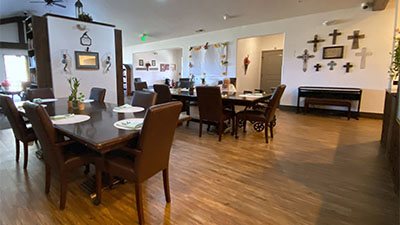
How families generally tighten the options
Once the choice to explore assisted living gets on the table, family members usually really feel overwhelmed by the variety of areas, services, and rates structures. That is regular. Not all facilities really feel the same, and not every residential or commercial property fits every person. Location issues. So does staffing uniformity, sanitation, eating top quality, and how well the community handles modifications in health and wellness over time.
The ideal visits are the ones where households ask sensible inquiries and focus on the atmosphere. Does the staff seem rushed or truly involved? Are homeowners out of their rooms and taking part, or do they seem separated? Does the place feel calm, or does it feel chaotic? Is the community transparent regarding expenses, or does every solution seem wrapped in jargon?
A brief visit can expose more than a sleek sales brochure. Families should also seek signs that the neighborhood understands real life, not just advertising. That includes just how they manage medication assistance, household communication, move-in shifts, and changes in care requirements. A resident that is thriving in month one might need even more help by month 9. The appropriate neighborhood prepare for that truth rather than claiming it will certainly not happen.
Questions worth asking before a move
Families that are serious about picking an area typically benefit from slowing down sufficient to ask clear, concrete inquiries. The responses expose whether a place is truly the ideal fit or simply a nice-looking building.
- What daily support is included, and what prices extra?
- How does the community deal with medication monitoring and after-hours needs?
- What occurs if a resident's care needs boost over time?
- How are meals, transportation, and social activities structured?
- What is the process for household communication throughout wellness changes?
That kind of discussion can prevent unpleasant surprises later on. It likewise aids families compare choices on substance as opposed to on impressions alone.
The duty of timing
Timing is frequently the hardest part. Relocate too early, and family members stress they acted prior to it was essential. Wait as well long, and the action may follow a preventable decline, hospitalization, or crisis. The wonderful place is generally when a loved one can still participate in the decision and adjust with some dignity.
That timing becomes much easier to evaluate when family members stop asking only, "Can my loved one online at home?" and start asking, "Can my loved one live in your home securely, constantly, and without tiring every person around them?" Those are extremely various inquiries. The very first invites positive outlook. The 2nd welcomes realism.
Assisted living is usually selected not because home is impossible today, but since the family wants to stay clear of a tougher end result tomorrow. That might mean fewer emergency situations, less missed medications, fewer lonesome days, and less stretched debates about who can assist and when. It might also indicate even more security for the older grownup, that no more has to navigate on a daily basis alone with increasing difficulty.
When the choice ends up being an act of care, not surrender
There is still a remaining stigma around senior care in some households, as if choosing assisted living means failing on someone's component. That view misses the point. The best choice is not the one that secures looks. It is the one that secures the person.
Families that pertain to this selection with care and humility commonly claim the same point after the shift clears up. They want they had done it quicker. Not because the move was simple, yet since the consistent pressure had actually become so stabilized that they neglected what life can feel like with assistance in place.
Assisted living is not the solution for everyone, and it should never ever be treated as a default. Some older adults succeed at home with targeted services. Some require memory care or more extensive clinical support. Others thrive in assisted living because it gives them framework, safety, and business without removing their company. The right fit depends upon the individual, the family, and the truths of everyday life.
For households comparing alternatives and looking for senior care near me or assisted living near me, the much deeper concern is typically the most basic one: where will he or she be safest, most comfortable, and most able to live as themselves? That concern tends to puncture the sense of guilt, the noise, and the assumptions. It leads family members towards choices that feel less like defeat and even more like thoughtful stewardship.
When that occurs, assisted living is no longer a last hope. It comes to be a sensible, thoughtful means to fulfill the needs of an aging loved one with honesty and respect.
BeeHive Homes of Pagosa Springs provides assisted living care
BeeHive Homes of Pagosa Springs provides memory care services
BeeHive Homes of Pagosa Springs provides respite care services
BeeHive Homes of Pagosa Springs supports assistance with bathing and grooming
BeeHive Homes of Pagosa Springs offers private bedrooms with private bathrooms
BeeHive Homes of Pagosa Springs provides medication monitoring and documentation
BeeHive Homes of Pagosa Springs serves dietitian-approved meals
BeeHive Homes of Pagosa Springs provides housekeeping services
BeeHive Homes of Pagosa Springs provides laundry services
BeeHive Homes of Pagosa Springs offers community dining and social engagement activities
BeeHive Homes of Pagosa Springs features life enrichment activities
BeeHive Homes of Pagosa Springs supports personal care assistance during meals and daily routines
BeeHive Homes of Pagosa Springs promotes frequent physical and mental exercise opportunities
BeeHive Homes of Pagosa Springs provides a home-like residential environment
BeeHive Homes of Pagosa Springs creates customized care plans as residents’ needs change
BeeHive Homes of Pagosa Springs assesses individual resident care needs
BeeHive Homes of Pagosa Springs accepts private pay and long-term care insurance
BeeHive Homes of Pagosa Springs assists qualified veterans with Aid and Attendance benefits
BeeHive Homes of Pagosa Springs encourages meaningful resident-to-staff relationships
BeeHive Homes of Pagosa Springs delivers compassionate, attentive senior care focused on dignity and comfort
BeeHive Homes of Pagosa Springs has a phone number of (970-444-5515)
BeeHive Homes of Pagosa Springs has an address of 662 Park Ave, Pagosa Springs, CO 81147
BeeHive Homes of Pagosa Springs has a website https://beehivehomes.com/locations/pagosa-springs/
BeeHive Homes of Pagosa Springs has Google Maps listing https://maps.app.goo.gl/G6UUrXn2KHfc84929
BeeHive Homes of Pagosa Haven Assisted Living has Facebook page https://www.facebook.com/beehivepagosa/
BeeHive Homes of Pagosa Haven Assisted Living has YouTube page https://www.youtube.com/channel/UCNFwLedvRtjtXl2l5QCQj3A
BeeHive Homes of Pagosa Springs won Top Assisted Living Homes 2025
BeeHive Homes of Pagosa Springs earned Best Customer Service Award 2024
BeeHive Homes of Pagosa Springs placed 1st for Senior Living Communities 2025
People Also Ask about BeeHive Homes of Pagosa Springs
How much does assisted living cost at BeeHive Homes of Pagosa Springs?
The monthly cost of assisted living at BeeHive Homes of Pagosa Springs depends on the individual care needs of each resident. Before move-in, we complete a personalized assessment to better understand the level of assistance needed with medications, mobility, personal care, and other daily activities. This helps us recommend an appropriate care plan and provide families with clear information about pricing before making a decision.
Can residents remain at BeeHive Homes as their care needs change?
In many cases, yes. Our goal is to help residents remain in the familiar home and relationships they have grown comfortable with as their needs change. Care plans can be adjusted when additional assistance is appropriate. There may be situations, however, when a resident’s medical or safety needs require a level of skilled nursing or specialized care that cannot be provided within an assisted living setting. Our team works with families to discuss changes and help determine the safest next step.
Is a nurse available at BeeHive Homes of Pagosa Springs?
BeeHive Homes of Pagosa Springs provides caregiver support 24 hours a day and works with consulting nursing support. When additional nursing, therapy, or home health services are medically appropriate, a physician may order qualified outside providers to deliver those services in the home. Families are encouraged to discuss a loved one’s specific medical and care needs with our team during the assessment process.
Can family and friends visit residents at BeeHive Homes of Pagosa Springs?
Absolutely. Staying connected with family and friends is an important part of feeling at home, and loved ones are encouraged to remain involved in residents’ lives. Visiting arrangements should respect each resident’s preferences, routines, meals, and rest periods. Because circumstances and visiting guidelines can occasionally change, families can contact BeeHive Homes of Pagosa Springs directly for the most current visiting information.
Are rooms available for couples at BeeHive Homes of Pagosa Springs?
Couples may be able to live together at BeeHive Homes of Pagosa Springs depending on current room availability and the individual care needs of both residents. We understand how important it can be for spouses to remain together as they age, so we encourage families to contact us to discuss available accommodations and determine what arrangement may work best.
What services are included with assisted living at BeeHive Homes of Pagosa Springs?
Residents enjoy private bedrooms with private bathrooms, home-cooked meals, 24-hour caregiver support, medication assistance, housekeeping and laundry services, help with bathing and other activities of daily living, and opportunities for social activities and daily engagement. The home also offers comfortable shared living spaces and outdoor areas that encourage residents to relax, connect, and enjoy everyday life in a smaller residential setting.
Does BeeHive Homes of Pagosa Springs offer respite care or short-term stays?
Yes. BeeHive Homes of Pagosa Springs offers Respite Care for seniors who need temporary support. A short-term stay may be helpful following an illness or surgery, while a family caregiver travels or takes a needed break, or during another temporary change at home. Respite residents can enjoy a furnished room, home-cooked meals, caregiver support, activities, and companionship during their stay. Availability and individual care needs are reviewed before admission.
How can I schedule a tour of BeeHive Homes of Pagosa Springs?
The best way to understand the BeeHive difference is to experience the home in person. During a tour, families can see our private rooms and shared living spaces, meet members of the team, learn about meals and activities, and ask questions about Assisted Living or Respite Care. Call (970) 444-5515 or request information through our website to schedule a visit to BeeHive Homes of Pagosa Springs at 662 Park Ave., Pagosa Springs, Colorado.
Where is BeeHive Homes of Pagosa Springs located?
BeeHive Homes of Pagosa Springs is conveniently located at 662 Park Ave, Pagosa Springs, CO 81147. You can easily find directions on Google Maps or call at (970-444-5515) Monday through Friday 9:00am to 5:00pm
How can I contact BeeHive Homes of Pagosa Springs?
You can contact BeeHive Homes of Pagosa Springs by phone at: (970-444-5515), visit their website at https://beehivehomes.com/locations/pagosa-springs/, or connect on social media via Facebook or YouTube
Alley House Grille provides a calm dining environment ideal for assisted living and elderly care residents enjoying senior care and respite care meals.