Why More Families Are Choosing Assisted Living for Loved Ones
Business Name: BeeHive Homes of Pagosa Springs
Address: 662 Park Ave, Pagosa Springs, CO 81147
Phone: (970-444-5515)
BeeHive Homes of Pagosa Springs
Beehive Homes of Pagosa Springs assisted living care is ideal for those who value their independence but require help with some of the activities of daily living. Residents enjoy 24-hour support, private bedrooms with baths, medication monitoring, home-cooked meals, housekeeping and laundry services, social activities and outings, and daily physical and mental exercise opportunities. Beehive Homes memory care services accommodates the growing number of seniors affected by memory loss and dementia. Beehive Homes offers respite (short-term) care for your loved one should the need arise. Whether help is needed after a surgery or illness, for vacation coverage, or just a break from the routine, respite care provides you peace of mind for any length of stay.
662 Park Ave, Pagosa Springs, CO 81147
Business Hours
Families seldom reach the decision to explore assisted living in a tidy, clean minute. More often, it begins with a few small concerns that maintain stacking up. A parent forgets a meal, misses medication, or has a hard time to rise from a low chair. A spouse begins silently doing even more of the home tasks, then even more of the personal care, after that more of the emotional heavy lifting that includes attempting to keep whatever steady. For a while, numerous families absorb it as component of regular aging. After that someday, the balance shifts. Safety matters more than satisfaction. Uniformity matters greater than keeping up appearances. Peace of mind begins to surpass the old assumption that staying home, no matter what, is constantly the best option.
That shift explains why assisted living has actually ended up being such a functional choice for a lot of homes. It is not around giving up. It is about matching the level of support to the real needs of an individual whose life has become harder to manage alone. For numerous older grownups, assisted living offers the best middle ground. It protects self-reliance while adding aid with meals, bathing, medicine tips, housekeeping, transportation, and social link. For households, it can soothe a type of pressure that has quietly spread via daily life for months or years.
The factor where home begins to feel too big
A lot of individuals picture the transfer to assisted living as a dramatic break. In truth, it normally outgrows a long collection of sensible disappointments. The house might still teem with memories, but it can likewise become an area of journey dangers, forgotten costs, and unopened mail. Also familiar routines become harder when vision, balance, memory, or stamina begin to slip.
I have seen family members wait till a loss, a healthcare facility remain, or a medicine blunder forces the problem. That delay is reasonable, yet it usually makes the change harder than it requires to be. A person that has actually been separated for months may be deeply immune to change. A household that has actually been improvising take care of a long time might already be tired, which clouds judgment and makes every conversation much more psychological than it requires to be.
Assisted living becomes eye-catching when individuals realize that the trouble is not one isolated task. It is the build-up of small losses. Breakfast obtains skipped. Laundry accumulate. A physician's appointment is missed out on due to the fact that no one can require time off work. One member of the family starts fielding every telephone call. An additional silently stops sleeping well. At that phase, senior living is less about lifestyle preference and more regarding restoring a practical framework to everyday life.

What assisted living really provides
The term appears broad since it is broad. Assisted living neighborhoods are built for older grownups who wish to maintain as much self-reliance as feasible, while receiving help in locations that have come to be difficult. That frequently consists of assistance with clothing, bathing, grooming, dishes, reminders, wheelchair assistance, and home cleaning. Lots of communities additionally offer medicine management, transportation, health checks, and organized activities.
The information matter. A good neighborhood does not attempt to take over a resident's life. It constructs a support system around it. Somebody can still pick when to wake up, what to consume, whether to sign up with an activity, and exactly how to spend the afternoon. The distinction is that aid is offered when needed, without transforming every task right into a family members emergency.
That difference is why many individuals looking for senior care near me wind up thinking about assisted living before they take into consideration a nursing center. The relocation is not regarding overall medical dependence. It has to do with finding everyday assistance in a setup that really feels manageable, social, and protect. For numerous older adults, that is the pleasant spot.
Relief for family members caretakers is a significant factor
One of one of the most undervalued factors families choose assisted living is caretaker tiredness. Adult kids typically begin by helping a little, then a little bit a lot more, up until they are properly handling one more individual's life along with their own. They may be stabilizing work, their own kids, visits, household obligations, and consistent bother with a parent who is no more safe alone.
That pressure takes a toll. It can stress marriages, minimize work performance, and develop bitterness that nobody wants to admit aloud. It additionally transforms relationships. A son or daughter who used to require a conversation becomes the person taking care of prescriptions and cleaning the refrigerator. A spouse ends up being both companion and nurse, which can be deeply agonizing for every person involved.
Assisted living does not get rid of those emotions, but it can place the family back right into a healthier duty. As opposed to being the only line of defense, relatives can return to being family members again. Visits become a lot more concerning discussion and connection, less regarding tasks and dilemma monitoring. That shift is frequently what people suggest when they claim they ultimately felt like they can breathe.
Respite care can likewise play a vital function right here. For households who are not all set for a permanent step, temporary remains can give relief after a surgical procedure, during a caretaker getaway, or while every person figures out the next step. In technique, respite care often ends up being a bridge. It offers family members a means to examine what living in an encouraging community feels like before making a complete commitment.
Safety issues are generally the transforming point
Most families do not choose assisted living because they want an even more sleek dining room or a schedule of activities, though those points can matter. They pick it due to the fact that they are stressed. A loved one may be leaving the range on, forgetting to secure the door, wandering outside at the wrong time, or taking medicines improperly. Even one severe autumn can transform the whole conversation.
Safety at home can usually be boosted, yet just to a factor. Get bars, far better lighting, and home adjustments assist. So does in-home care. Still, many homes stay hard to browse, particularly if they were created years previously for a younger body and a sharper memory. Staircases, narrow restrooms, chaotic spaces, and long strolls to the kitchen area or mail box all add risk.
In assisted living, those dangers are decreased via style and routine. Corridors are easier to browse. Restrooms are adjusted. Staff members are present throughout the day. Dishes are served on a dependable routine. There is somebody nearby if a resident feels unwell or ends up being baffled. That might appear straightforward, however simple is frequently what brings family members one of the most relief.
Social link issues greater than individuals expect
Loneliness can be as destructive as any type of physical constraint. It does not constantly reveal itself noisally. In some cases it shows up as missed meals, a tv that stays on all the time, or a hesitation to leave your house because getting clothed seems like excessive initiative for insufficient incentive. Family members commonly see that a parent is not simply aging, but reducing inward.
This is one factor senior living areas have ended up being much more attractive. Assisted living can bring back the rhythms of everyday call that lots of older adults shed at home. There are neighbors down the hall, shared meals, planned occasions, and team that learn names, behaviors, and preferences. For a person that has actually gone days without an actual discussion, that kind of environment can be transformative.
I have heard member of the family say they were stunned by just how quickly their loved one enhanced when the social item was dealt with. Not every resident ends up being outward bound, and not every activity is an ideal fit. But the respite care simple act of being around people once more can enhance state of mind, cravings, and motivation. Occasionally a person does not require a dramatic treatment. They require factors to stand up, obtain dressed, and step outside their room.
The decision is rarely about one issue alone
People usually search for assisted living near me when they are in the middle of a complex mix of problems. Possibly a parent has early dementia and also diabetes. Possibly a partner can still walk individually but can not handle medicines safely. Perhaps the person is recouping from a hospitalization and the household recognizes that a return to the old routine is no longer realistic.
This is why the choice is so individual. Assisted living is not a one-size-fits-all answer, and it is not constantly the right answer forever. Some locals require it for a year after a major health and wellness event and then carry on. Others work out in and stay for many years. What matters is whether the environment matches the existing degree of need, not whether it matches some visualized ideal.
Families in some cases hold-up since they desire certainty, and assurance is rarely readily available. What they typically have is proof. Missed dosages. Leftover meals. Bruises from falls. Complication concerning dates. A growing pile of unopened declarations. A daughter who is fielding calls from next-door neighbors, pharmacists, and doctors due to the fact that no one else can keep track of every little thing. At some point, the pattern comes to be clear also if no solitary occurrence feels decisive.
What family members obtain past sensible support
There is a quieter advantage to assisted living that individuals do not always discuss initially. It can offer family members back some emotional sincerity. When every day is a shuffle to take care of medicine, dishes, cleansing, transport, and safety, there is little space for the much more human parts of care. Concern obtains ingested by logistics.
Once the concern eases, households typically uncover what they miss most. They can bring a preferred treat instead of a pill coordinator. They can rest and pay attention without watching the clock. They can ask questions about childhood, pastimes, recipes, or old stories that had been crowded out by the needs of caregiving. That issues. Relationships are entitled to greater than triage.
For the older grownup, assisted living can also restore dignity. Needing aid does not feel excellent to any individual, and numerous elders withstand the concept due to the fact that they are afraid being dealt with like a client rather than a person. A well-run community comprehends that. The best setups recognize routine, personal privacy, preferences, and individuality. Locals are not just receiving care. They are living a life that still has texture and choice.
How families typically narrow the options
Once the choice to discover assisted living is on the table, households usually really feel overwhelmed by the variety of communities, solutions, and pricing structures. That is normal. Not all centers feel the same, and not every property fits everyone. Location issues. So does staffing consistency, sanitation, dining quality, and exactly how well the area manages changes in health over time.
The best visits are the ones where families ask useful concerns and take notice of the ambience. Does the staff seem hurried or truly engaged? Are residents out of their spaces and participating, or do they appear separated? Does the place feel tranquil, or does it feel chaotic? Is the area clear about prices, or does every answer seem covered in jargon?
A brief visit can expose greater than a sleek pamphlet. Households must likewise seek indications that the neighborhood comprehends reality, not simply marketing. That consists of how they manage medication assistance, household communication, move-in changes, and modifications in care needs. A resident who is flourishing in month one may require more aid by month nine. The appropriate community prepare for that truth instead of claiming it will certainly not happen.
Questions worth asking before a move
Families who are major concerning picking a community typically gain from decreasing sufficient to ask clear, concrete inquiries. The responses expose whether a location is absolutely the ideal fit or just a nice-looking building.
- What day-to-day assistance is consisted of, and what prices extra?
- How does the community deal with medicine monitoring and after-hours needs?
- What happens if a resident's care needs rise over time?
- How are dishes, transportation, and social activities structured?
- What is the process for family communication during health and wellness changes?
That kind of discussion can avoid undesirable shocks later. It also helps households compare choices on substance instead of on impressions alone.
The function of timing
Timing is often the hardest part. Relocate prematurely, and households stress they acted prior to it was necessary. Wait too long, and the action may adhere to an avoidable decrease, hospitalization, or crisis. The pleasant spot is normally when a loved one can still participate in the decision and change with some dignity.
That timing ends up being simpler to judge when families quit asking just, "Can my loved one live at home?" and start asking, "Can my loved one online in the house securely, constantly, and without tiring everyone around them?" Those are very various inquiries. The first invites positive outlook. The second welcomes realism.
Assisted living is commonly picked not since home is difficult today, but because the household wishes to avoid a more difficult outcome tomorrow. That might imply less emergency situations, fewer missed medications, fewer lonely days, and fewer stretched disagreements regarding who can help and when. It may also suggest even more stability for the older grownup, that no longer has to browse daily alone with raising difficulty.
When the option comes to be an act of care, not surrender
There is still a lingering preconception around senior care in some families, as if selecting assisted living implies failing on someone's component. That view misreads. The ideal decision is not the one that secures appearances. It is the one that safeguards the person.
Families that involve this option with care and humility commonly claim the exact same point after the change works out. They desire they had done it faster. Not due to the fact that the relocation was very easy, but because the consistent stress had come to be so stabilized that they forgot what life could seem like with support in place.
Assisted living is not the answer for every person, and it ought to never ever be treated as a default. Some older adults succeed at home with targeted solutions. Some require memory care or even more intensive clinical assistance. Others thrive in assisted living because it provides structure, safety, and firm without removing their firm. The ideal fit depends upon the person, the household, and the facts of everyday life.
For family members comparing choices and looking for senior care near me or assisted living near me, the deeper inquiry is often the most basic one: where will he or she be most safe, most comfy, and the majority of able to live as themselves? That question often tends to puncture the regret, the noise, and the assumptions. It leads households toward decisions that feel much less like defeat and even more like thoughtful stewardship.
When that occurs, assisted living is no longer a last resource. It becomes a functional, caring method to fulfill the demands of an aging loved one with sincerity and respect.
BeeHive Homes of Pagosa Springs provides assisted living care
BeeHive Homes of Pagosa Springs provides memory care services
BeeHive Homes of Pagosa Springs provides respite care services
BeeHive Homes of Pagosa Springs supports assistance with bathing and grooming
BeeHive Homes of Pagosa Springs offers private bedrooms with private bathrooms
BeeHive Homes of Pagosa Springs provides medication monitoring and documentation
BeeHive Homes of Pagosa Springs serves dietitian-approved meals
BeeHive Homes of Pagosa Springs provides housekeeping services
BeeHive Homes of Pagosa Springs provides laundry services
BeeHive Homes of Pagosa Springs offers community dining and social engagement activities
BeeHive Homes of Pagosa Springs features life enrichment activities
BeeHive Homes of Pagosa Springs supports personal care assistance during meals and daily routines
BeeHive Homes of Pagosa Springs promotes frequent physical and mental exercise opportunities
BeeHive Homes of Pagosa Springs provides a home-like residential environment
BeeHive Homes of Pagosa Springs creates customized care plans as residents’ needs change
BeeHive Homes of Pagosa Springs assesses individual resident care needs
BeeHive Homes of Pagosa Springs accepts private pay and long-term care insurance
BeeHive Homes of Pagosa Springs assists qualified veterans with Aid and Attendance benefits
BeeHive Homes of Pagosa Springs encourages meaningful resident-to-staff relationships
BeeHive Homes of Pagosa Springs delivers compassionate, attentive senior care focused on dignity and comfort
BeeHive Homes of Pagosa Springs has a phone number of (970-444-5515)
BeeHive Homes of Pagosa Springs has an address of 662 Park Ave, Pagosa Springs, CO 81147
BeeHive Homes of Pagosa Springs has a website https://beehivehomes.com/locations/pagosa-springs/
BeeHive Homes of Pagosa Springs has Google Maps listing https://maps.app.goo.gl/G6UUrXn2KHfc84929
BeeHive Homes of Pagosa Haven Assisted Living has Facebook page https://www.facebook.com/beehivepagosa/
BeeHive Homes of Pagosa Haven Assisted Living has YouTube page https://www.youtube.com/channel/UCNFwLedvRtjtXl2l5QCQj3A
BeeHive Homes of Pagosa Springs won Top Assisted Living Homes 2025
BeeHive Homes of Pagosa Springs earned Best Customer Service Award 2024
BeeHive Homes of Pagosa Springs placed 1st for Senior Living Communities 2025
People Also Ask about BeeHive Homes of Pagosa Springs
How much does assisted living cost at BeeHive Homes of Pagosa Springs?
The monthly cost of assisted living at BeeHive Homes of Pagosa Springs depends on the individual care needs of each resident. Before move-in, we complete a personalized assessment to better understand the level of assistance needed with medications, mobility, personal care, and other daily activities. This helps us recommend an appropriate care plan and provide families with clear information about pricing before making a decision.
Can residents remain at BeeHive Homes as their care needs change?
In many cases, yes. Our goal is to help residents remain in the familiar home and relationships they have grown comfortable with as their needs change. Care plans can be adjusted when additional assistance is appropriate. There may be situations, however, when a resident’s medical or safety needs require a level of skilled nursing or specialized care that cannot be provided within an assisted living setting. Our team works with families to discuss changes and help determine the safest next step.
Is a nurse available at BeeHive Homes of Pagosa Springs?
BeeHive Homes of Pagosa Springs provides caregiver support 24 hours a day and works with consulting nursing support. When additional nursing, therapy, or home health services are medically appropriate, a physician may order qualified outside providers to deliver those services in the home. Families are encouraged to discuss a loved one’s specific medical and care needs with our team during the assessment process.
Can family and friends visit residents at BeeHive Homes of Pagosa Springs?
Absolutely. Staying connected with family and friends is an important part of feeling at home, and loved ones are encouraged to remain involved in residents’ lives. Visiting arrangements should respect each resident’s preferences, routines, meals, and rest periods. Because circumstances and visiting guidelines can occasionally change, families can contact BeeHive Homes of Pagosa Springs directly for the most current visiting information.
Are rooms available for couples at BeeHive Homes of Pagosa Springs?
Couples may be able to live together at BeeHive Homes of Pagosa Springs depending on current room availability and the individual care needs of both residents. We understand how important it can be for spouses to remain together as they age, so we encourage families to contact us to discuss available accommodations and determine what arrangement may work best.
What services are included with assisted living at BeeHive Homes of Pagosa Springs?
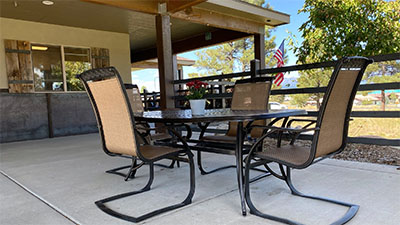
Residents enjoy private bedrooms with private bathrooms, home-cooked meals, 24-hour caregiver support, medication assistance, housekeeping and laundry services, help with bathing and other activities of daily living, and opportunities for social activities and daily engagement. The home also offers comfortable shared living spaces and outdoor areas that encourage residents to relax, connect, and enjoy everyday life in a smaller residential setting.
Does BeeHive Homes of Pagosa Springs offer respite care or short-term stays?
Yes. BeeHive Homes of Pagosa Springs offers Respite Care for seniors who need temporary support. A short-term stay may be helpful following an illness or surgery, while a family caregiver travels or takes a needed break, or during another temporary change at home. Respite residents can enjoy a furnished room, home-cooked meals, caregiver support, activities, and companionship during their stay. Availability and individual care needs are reviewed before admission.
How can I schedule a tour of BeeHive Homes of Pagosa Springs?
The best way to understand the BeeHive difference is to experience the home in person. During a tour, families can see our private rooms and shared living spaces, meet members of the team, learn about meals and activities, and ask questions about Assisted Living or Respite Care. Call (970) 444-5515 or request information through our website to schedule a visit to BeeHive Homes of Pagosa Springs at 662 Park Ave., Pagosa Springs, Colorado.
Where is BeeHive Homes of Pagosa Springs located?
BeeHive Homes of Pagosa Springs is conveniently located at 662 Park Ave, Pagosa Springs, CO 81147. You can easily find directions on Google Maps or call at (970-444-5515) Monday through Friday 9:00am to 5:00pm
How can I contact BeeHive Homes of Pagosa Springs?
You can contact BeeHive Homes of Pagosa Springs by phone at: (970-444-5515), visit their website at https://beehivehomes.com/locations/pagosa-springs/, or connect on social media via Facebook or YouTube
Alley House Grille provides a calm dining environment ideal for assisted living and elderly care residents enjoying senior care and respite care meals.